About Kevin

Hi, I'm Kevin.
I build things
that grow.

"I don't run campaigns. I build growth systems — and I genuinely enjoy figuring out why a funnel leaks at 2am."

Growth marketer. Revenue engineer. Perpetually curious person from Navi Mumbai who somehow ended up spending most of his waking hours thinking about conversion rates, WhatsApp automation, and why most marketing advice on LinkedIn is wrong.
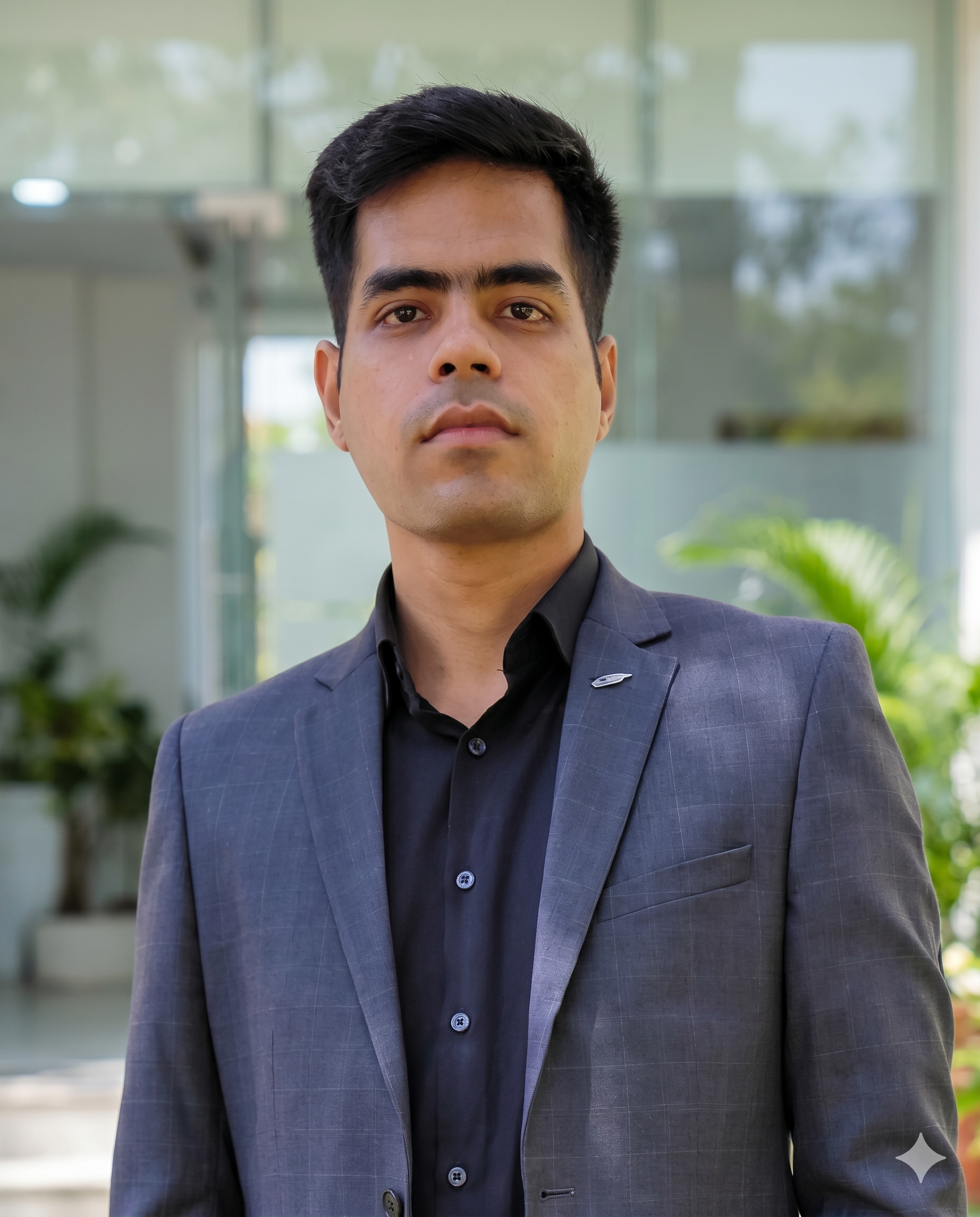
KS
Navi Mumbai · 2025
Available for hire
📍Navi Mumbai, Maharashtra
🎓BSc. Information Technology
2+ years · 4 industries · real results
🚀Currently: Grexa AI · Senior Growth Associate
📖Also building: AI Growth Marketing Program
The Why

Why I Do What I Do

Honestly? It started out of pure frustration. I watched brands spend money on ads that went nowhere, hire agencies who reported metrics nobody understood, and call it "marketing" when it was really just noise generation with a budget.

I joined my first brand as an intern handling Shopify and IT. Then I started looking at the marketing numbers. And I couldn't stop thinking about why they didn't work. Not in a complaining way — in a "there has to be a better system" way.

Turns out there was. The system was: understand the buyer before touching the campaign. Diagnose the funnel before spending on ads. Fix the conversion rate before scaling the budget. Build retention before obsessing over acquisition.

These aren't revolutionary ideas. They're just consistently ignored in favour of the exciting thing (running ads, doing influencer campaigns, redesigning the website). I find the non-exciting, diagnostic work genuinely interesting. That's probably a personality flaw but it's served me pretty well.

What keeps me going: the compounding effect. When a growth system works properly — when all the pieces actually connect — the results don't grow linearly. They compound. Watching revenue go from ₹5L to ₹38L/month on the same budget is one of the more satisfying things I've experienced professionally.

Core belief #1
Most marketing problems are strategy problems in disguise. The ad isn't the problem. The funnel it feeds is.
Core belief #2
Retention is the real growth lever. Acquisition gets attention. Retention builds the business. Everyone forgets this until they're bleeding churn.
Core belief #3
Sales teams are the most underused market research asset in most companies. Sit with the sales team for one week and you'll know more about your customer than a month of ad testing.
Core belief #4
Conversion beats acquisition — always. Fix the funnel before scaling the budget. I've never once regretted this sequencing.
Core belief #5
AI is leverage, not magic. It amplifies clear thinking. It cannot replace it. A marketer who thinks well + uses AI well is unstoppable. A marketer who just prompts randomly is just fast at producing mediocrity.
4
Industries scaled
D2C · Hospitality · EdTech · SaaS
₹0
Budget increase needed
At Netweaver for 7× revenue
50M+
Influencer views generated
At ≈ zero media cost
2am
Avg time I'm still debugging funnels
This is not a flex, this is a problem

"I scale businesses by fixing their growth systems — from first click to final conversion and beyond. Not by running more ads. By building the thing the ads are supposed to feed."

Kevin Shelly · Navi Mumbai · 2025
The Method

How I Actually Work

I have a five-step operating system I apply to every engagement — whether it's a D2C brand, a luxury villa, an EdTech platform, or a B2B SaaS. The tools change. The framework doesn't. Here's what it looks like in practice.

01
Baseline & Constraint Mapping — before anything moves
I spend the first 1–2 weeks purely in audit mode. No campaigns, no content, no "quick wins." I pull everything: revenue data, CPL benchmarks, funnel conversion rates, ICP assumptions, tech stack, team bandwidth, and budget constraints. The constraint is never what people think it is. Finding the real constraint is the whole job.
GA4
Shopify Analytics
CRM data
Ads Manager
Interviews
02
Funnel Diagnosis — find the leak, not the symptom
High traffic, low sales? Conversion problem. Low traffic, good sales? Acquisition problem. High churn? Retention problem. I map every stage with a drop-off estimate before recommending a single thing. Most businesses want me to "improve the ads." Usually the ads are fine. Usually it's the landing page, the nurture, or the offer. I'd rather tell you that in week 1 than in week 12.
Funnel mapping
Heatmaps
Conversion tracking
AARRR model
03
ICE-Scored Experiment Backlog — no gut feelings
Every potential fix gets scored on Impact × Confidence × Ease. The highest-scoring items go first. This removes subjective "I think we should…" conversations and replaces them with a shared, prioritised list. The backlog gets updated weekly as new data comes in. Nothing scales until it earns the right to scale at a smaller budget first.
ICE framework
Notion
A/B testing
Creative matrix
04
Weekly Execution Cadence — decisions on data, not instinct
Monday review, Wednesday performance check, Friday one-page report to founders. Every week. This cadence sounds boring and it is — that's the point. Boring consistency beats exciting improvisation in growth marketing every single time. The Friday report is always the same format: what happened, what it means, what we're doing next. Under one page. If it doesn't fit on one page, you don't understand it well enough yet.
Weekly sprint rhythm
Looker Studio
Founder reporting
Decision log
05
Attribution & Kill Rules — when to stop, when to scale
Decision rules are written in advance. Any ad set below target ROAS for 7 consecutive days gets paused. Any creative below 1.5% CTR after 500 impressions gets killed. Any WhatsApp message with under 40% open rate gets rewritten. These rules are documented and shared before campaigns launch. Removing subjective kill decisions is the single most important thing you can do for consistent growth marketing performance.
Blended attribution
Kill rules doc
ROAS thresholds
Shopify source of truth
The Human

Outside the Dashboards

The things that make me a slightly more interesting person than my LinkedIn profile suggests.

🎵
Music is my context-switching tool
I listen to music obsessively while working — different playlists for different tasks. Deep focus gets ambient and electronic. Strategy sessions get hip-hop. Writing gets jazz. If I'm debugging a campaign at midnight, it's probably lo-fi beats doing the emotional labour. I have strong opinions about this and will defend them unprompted.
🏙️
I think best when I'm walking
Some of my best funnel diagnoses have happened on walks around Navi Mumbai. There's something about movement that unsticks thinking. I keep my phone's voice memo app in my dock specifically for this. Half my Notion notes start with "recorded this on a walk near sector 15." I don't know if this is a growth marketing skill or just how my brain works.
📚
I read obsessively, mostly non-fiction
Marketing books (obviously), but also product design, behavioural economics, psychology, and occasionally a good thriller because life needs balance. Some books that permanently changed how I think: Thinking Fast and Slow, The Lean Startup, Obviously Awesome (positioning), and This is Marketing by Seth Godin. I re-read Godin's stuff every year and notice different things each time.
🤖
I am genuinely excited about AI in a non-cringe way
I don't think AI is coming for everyone's job. I think it's coming for the part of everyone's job that was always a bit tedious. I use ChatGPT, Claude, and n8n automation daily — not to replace thinking, but to do in 20 minutes what used to take 3 hours. The freed-up time goes into the stuff that actually requires a human: strategy, judgement, relationships, and reading the weird early signal that something isn't working.
Coffee is a personality trait at this point
Strong filter coffee in the morning. Anything I need to run a late-night campaign audit. I've tried switching to tea multiple times and failed all of them. I accept this about myself. I also accept that "just one more data pull" at 11pm with a coffee in hand is how most of my late-night funnel breakthroughs happen. Not proud. Not changing.
🎮
I think gaming taught me systems thinking
Grew up playing strategy games — Age of Empires, Civilization, RTS games. Looking back, these games are basically funnel optimization with swords. Resource management, sequencing decisions, identifying bottlenecks, balancing short-term wins against long-term compounding. I'm not sure I'd have the same instinct for how growth systems work if I hadn't spent years thinking about how to scale a medieval city-state before I turned 15.
Right Now

What I'm Up To

A real-time snapshot. Last updated: March 2026.

🏢
Day Job
Senior Growth Associate at Grexa AI — building the entire GTM from zero. Currently at 50M+ influencer views, 75% customer retention, and 50% MoM growth. Still very much in the thick of it.
🎓
Side Build
AI Growth Marketing Program — launching a structured 5-month cohort program teaching growth marketing + AI + n8n automation to the next generation of marketers. Because I wish someone had taught me this way.
📖
Currently Reading
Blitzscaling by Reid Hoffman — studying how SaaS companies grow at uncommon speeds. Also re-reading Seth Godin's This is Marketing for the third time because the first two apparently weren't enough.
🔍
Currently Exploring
Advanced n8n workflow systems for marketing automation — specifically building AI-native lead nurturing pipelines that require zero human intervention after the initial setup. The goal: write it once, run it forever.
🎯
Open To
Full-time growth roles at early-stage to Series B startups — D2C, SaaS, EdTech, or anything interesting. Also open to fractional or consulting engagements. If you're building something and need someone to own the growth function, let's talk.
💭
Currently Thinking About
Whether the "ICP-first" rule applies to absolutely everything — I'm testing whether it holds for content strategy, influencer selection, and even hiring decisions. My current hypothesis: yes, it always does. More data needed.
Quick Fire

Questions I Actually Get Asked

Some professional, some not. All answered honestly.

Why growth marketing and not, like, a normal job?
Because I genuinely enjoy the puzzle of it. The moment a campaign stops working and you have to figure out why — is it the creative, the audience, the landing page, the offer, the timing? — is the most interesting problem in business. I've tried explaining this to people who aren't in marketing and it doesn't land. But if you're in the field, you know exactly what I mean.
What's the most common mistake you see companies make?
Scaling acquisition before fixing conversion. Every. Single. Time. A business with a 5% landing page CVR that doubles its ad budget has just paid twice as much for the same number of customers. Fix the funnel first. The ad budget will go much further on the other side of that work. I've said this so many times I should have it tattooed somewhere visible.
Meta or Google — if you could only use one for the rest of your career?
Google. Intent-based marketing is the purest form of the craft. Reaching someone at the exact moment they're looking for your solution — and having the right message waiting — is elegant in a way that interest-based targeting isn't. That said, the creative constraints of Meta force you to think about storytelling in a way Google doesn't. I use both. But if forced to choose: Google, no hesitation.
What would you be doing if not marketing?
Probably product. The thing I love most about growth marketing is that it sits at the intersection of product, psychology, data, and storytelling. Product management is the same intersection from a different angle. I spend a lot of time thinking about user behaviour that probably belongs in a product role, but growth marketing lets me connect it directly to revenue which is where I find the most satisfaction.
Honestly, what's the thing you're worst at?
Patience with slow feedback loops. I want to know if something worked within 72 hours and SEO operates on a 6-month cycle. I've gotten better at this — I now build leading indicator dashboards that give early signals before the lagging indicators arrive — but my natural instinct is still to want the data yesterday and I have to actively manage that impulse.
What does your ideal work environment look like?
A small, fast-moving team that cares about results more than process. Direct access to the founder or decision-maker. A product that actually works (I can market almost anything but marketing something broken is depressing). Data infrastructure that isn't held together with spreadsheets and prayers. And ideally, someone who understands that "let's see what the numbers say" is not a cop-out but the only honest answer.
Let's talk

Say Hi.

Whether you're looking for a growth marketer, want to talk shop about funnels and retention, have a question about the AI Growth Marketing Program, or just want to argue about whether Meta or Google is better — my inbox is genuinely open.

Replies within 24 hours · Available for immediate hire · Navi Mumbai + Remote
Or just go look at the actual work →